

Your home’s electrical system is something most people rely on every day without thinking about. From powering your appliances and lighting to keeping your heating, entertainment and security systems running, modern life depends on safe and reliable electrics.
However, electrical problems can develop over time, especially in older properties. Ignoring warning signs can lead to damaged appliances, power failures, or in serious cases, electrical fires.
Here are 10 signs that your electrics may need checking by a qualified electrician.
1. Your circuit breaker keeps tripping
If your fuse box or consumer unit frequently trips, it is usually a sign that something is wrong.
Circuit breakers are designed to protect your home by cutting power when they detect a fault, such as:
- An overloaded circuit
- A faulty appliance
- A wiring problem
- A short circuit
While resetting the switch may restore power temporarily, repeated trips should not be ignored. A qualified electrician can identify the cause and make sure your system is safe.
2. Flickering or dimming lights
Lights that flicker, buzz, or suddenly dim could indicate an electrical issue.
Possible causes include:
- Loose connections
- Faulty light fittings
- Overloaded circuits
- Problems with your wiring
Occasional flickering from a single bulb may simply mean the bulb needs replacing, but frequent problems throughout your home should be investigated.
3. Burning smells or scorch marks around sockets
A burning smell near sockets, switches, or your consumer unit should always be taken seriously.
You may notice:
- A smell similar to burning plastic
- Brown marks around sockets
- Discolouration on switches
- Warm or melted plastic
These can be signs of overheating wiring or faulty connections. Turn off the power if you can do so safely and contact an electrician.
4. Warm or hot electrical sockets
Electrical sockets should not feel hot during normal use.
A warm socket could indicate:
- Loose wiring connections
- A damaged socket
- An overloaded circuit
- Poor installation
If a socket feels unusually warm, avoid using it until it has been checked.
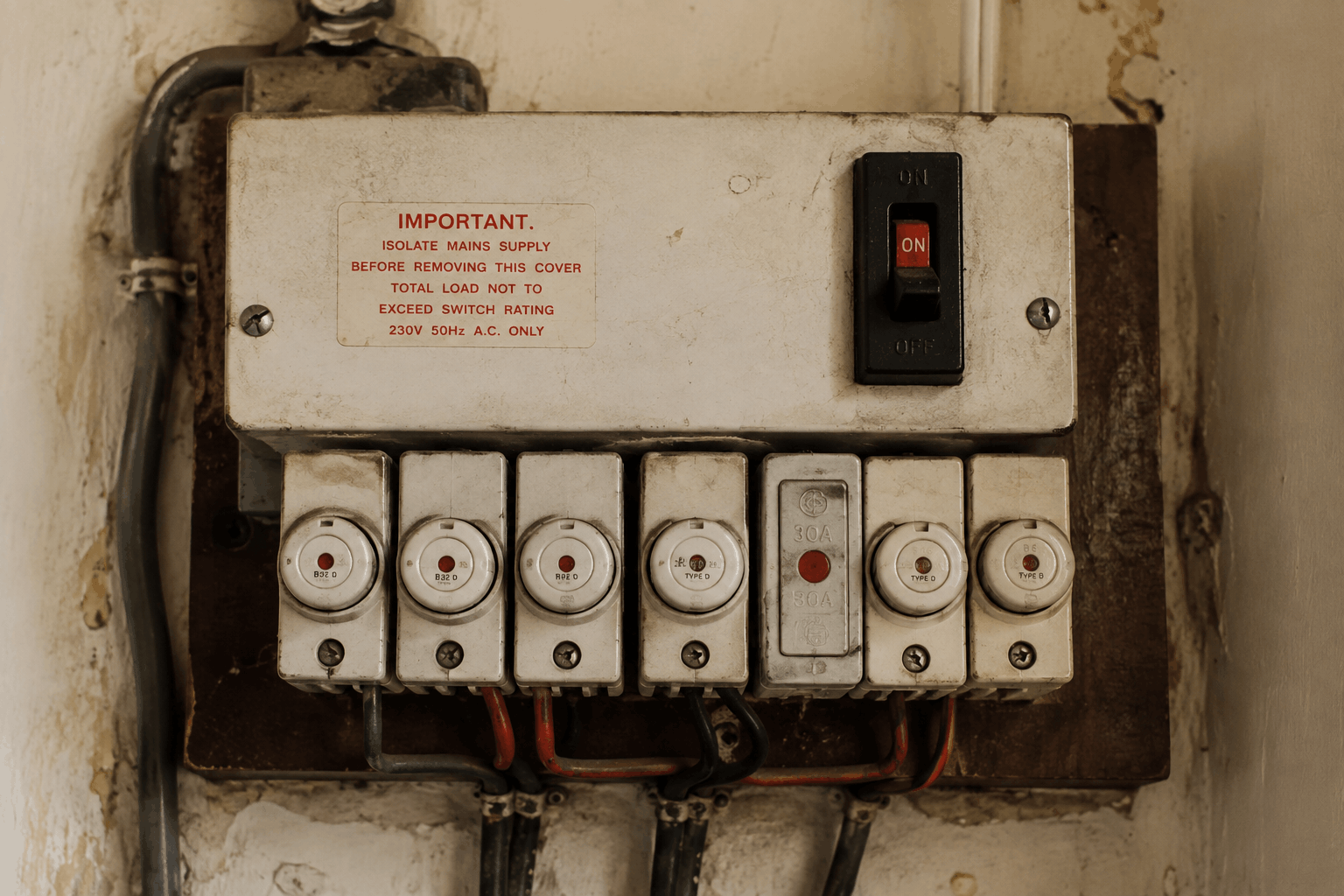
5. You have an old fuse box or consumer unit
Many older UK properties still have outdated electrical systems that may not provide the same level of protection as modern installations.
Signs your consumer unit may need upgrading include:
- Ceramic fuses
- A wooden-backed fuse box
- No RCD protection
- Older-style switches and wiring
Modern consumer units with RCD and RCBO protection provide improved safety by helping protect against electric shocks and electrical faults.
6. You rely heavily on extension leads and adaptors
Modern homes use far more electrical devices than properties were originally designed for.
If you regularly rely on:
- Multiple extension leads
- Plug adaptors
- Extension blocks
- Daisy-chained cables
it may indicate that your home needs additional sockets or an electrical upgrade.
Overloading sockets can create unnecessary risks, especially with high-power appliances such as heaters, tumble dryers and kitchen equipment.
7. Your sockets or switches are cracked, loose or damaged
Damaged electrical accessories should never be ignored.
Look out for:
- Loose sockets
- Cracked faceplates
- Broken switches
- Exposed gaps around fittings
Small problems can allow dust, moisture or accidental contact with electrical parts, increasing the risk of faults.
8. You experience electric shocks or tingling sensations
If you feel a tingling sensation when touching an appliance, tap, or metal fitting, there may be an electrical fault.
Even a small shock should be investigated, as it could indicate:
- Poor earthing
- Faulty wiring
- An appliance fault
Do not assume it is harmless. Electrical safety issues can worsen over time.
9. Your home has never had an electrical inspection
Many homeowners are unsure about the condition of their wiring because electrical systems are hidden behind walls and ceilings.
An Electrical Installation Condition Report (EICR) can help identify:
- Damaged wiring
- Safety issues
- Outdated components
- Potential hazards
For homeowners, regular checks provide peace of mind. For landlords in England, an EICR is a legal requirement at least every five years for rental properties.
10. Your electrics are over 25–30 years old
Electrical installations do not last forever.
If your home has not had electrical work carried out for decades, it may not meet modern safety expectations.
Older properties often have:
- Outdated wiring
- Insufficient sockets
- Lack of protective devices
- Older consumer units
A professional inspection can highlight any improvements needed to keep your home safe.
Don’t ignore electrical warning signs
Electrical problems rarely fix themselves. If you have noticed any of these warning signs, it is best to arrange an inspection with a qualified electrician.
A professional check can help identify problems early, improve safety, and give you confidence that your home’s electrical system is working correctly.
Need your electrics checked? Contact your local qualified electrician today for advice and a professional assessment.
Always use a qualified electrician registered with a recognised scheme such as NICEIC or NAPIT for electrical work in your home.
If you’re experiencing any of the above call us today for a free no-obligation quote on 07535 925 825