

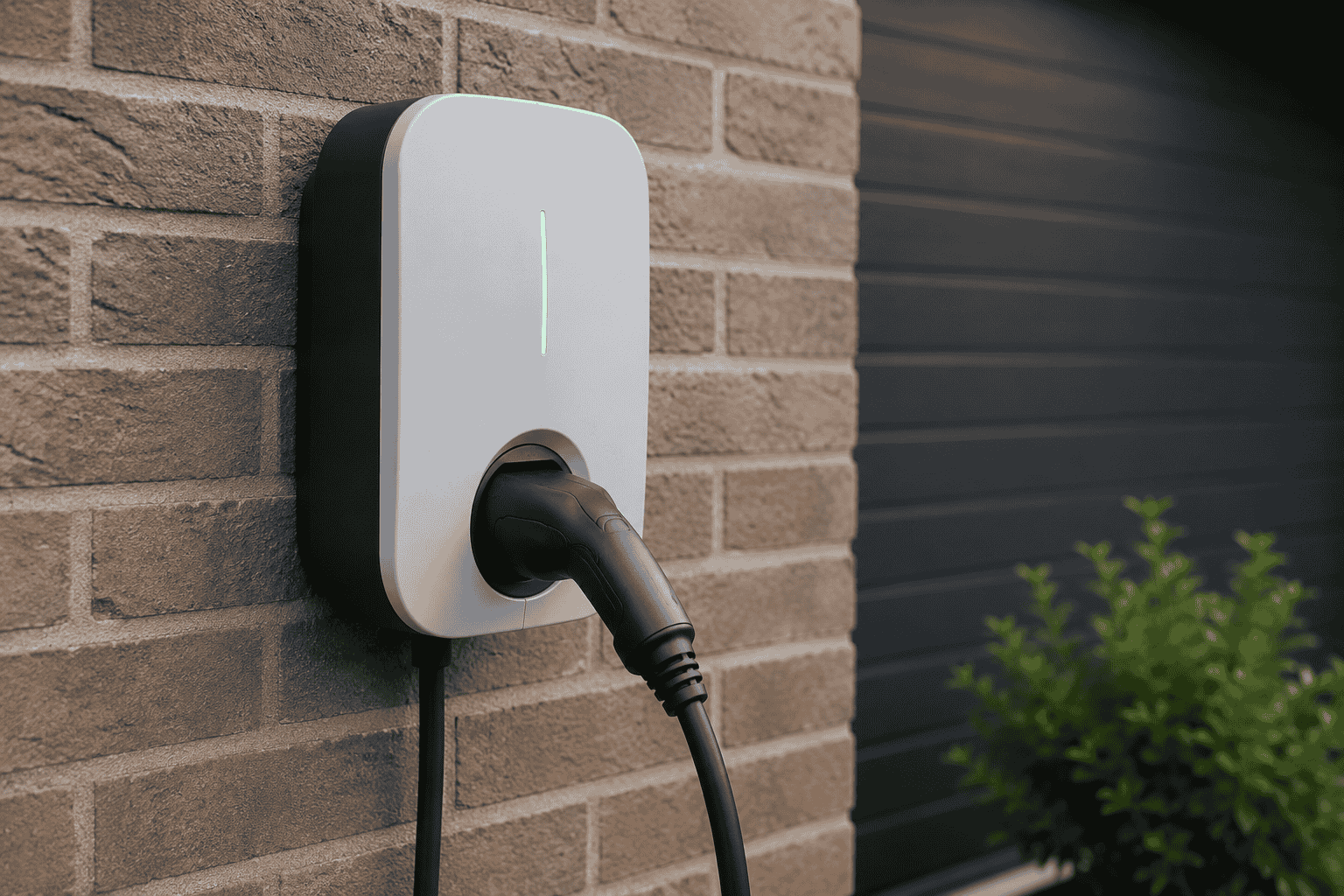
For many UK motorists, the most significant financial advantage of owning an electric vehicle (EV) isn’t simply switching from petrol or diesel, it’s charging at home. While public charging remains essential for long-distance travel, home charging is typically the most cost-effective and convenient way to keep an EV powered (Energy Saving Trust, 2026).
Electricity purchased through a domestic energy tariff is generally much less expensive than electricity supplied by public rapid and ultra-rapid charging networks. According to the Energy Saving Trust (2026), charging an EV at home is usually the cheapest option, particularly when drivers make use of off-peak or dedicated EV tariffs.
Why home charging is cheaper
Many UK energy suppliers now offer smart tariffs with reduced overnight electricity rates. By scheduling charging during these lower-cost periods, drivers can significantly reduce the cost of every mile travelled (Energy Saving Trust, 2026; Zapmap, 2026).
The difference between home and public charging
Public charging provides flexibility and enables long-distance travel, but that convenience comes at a premium. Zapmap’s charging cost data consistently shows that rapid and ultra-rapid public chargers cost substantially more per kilowatt-hour (kWh) than domestic electricity tariffs (Zapmap, 2026).
Similarly, the RAC notes that while home charging remains considerably cheaper than fuelling a comparable petrol or diesel vehicle, the financial advantage narrows when drivers rely heavily on public rapid charging (RAC, 2026).
For this reason, most EV owners aim to complete the majority of their charging at home and use public chargers only when necessary.
How much could you save?
The exact savings depend on several factors, including:
- Your annual mileage.
- The efficiency of your vehicle.
- Your electricity tariff.
- Local fuel prices.
- How often you use public chargers.
For someone travelling around 10,000 miles per year, charging primarily at home rather than relying on public rapid charging can reduce annual energy costs by several hundred pounds. Drivers switching from a petrol or diesel vehicle may save even more, particularly if they regularly charge overnight on a low-cost EV tariff (Zapmap, 2026; RAC, 2026).
While every driver’s circumstances are different, the overall evidence consistently shows that home charging offers the lowest running costs.
Smart charging makes an even bigger difference
Most modern EVs and home chargepoints allow drivers to schedule charging automatically.
Rather than charging immediately after plugging in, the vehicle can begin charging during off-peak hours when electricity demand, and therefore prices is lower. This allows owners to take full advantage of time-of-use tariffs without changing their daily routine (Energy Saving Trust, 2026).
Smart charging also helps reduce pressure on the electricity grid by shifting demand away from peak periods.
Convenience has value too
Cost savings are only part of the picture.
Charging at home means drivers can simply plug in when they arrive home and wake up to a fully charged battery the following morning. This removes the need for regular visits to public charging stations and reduces the likelihood of waiting for an available charger during busy periods (Zapmap, 2025).
Lower overall running costs
Electric vehicles can also be less expensive to maintain than petrol or diesel cars because they contain fewer moving parts and do not require services such as oil changes or exhaust maintenance. Regenerative braking can also reduce wear on brake components, lowering maintenance costs over the lifetime of the vehicle (Energy Saving Trust, 2026).
Is a home charger worth the investment?
Installing a dedicated 7 kW home chargepoint typically costs between £700 and £1,200, depending on the property and installation requirements (Zapmap, 2025).
Although this represents an upfront investment, many drivers recover a significant proportion of the cost over time through lower charging costs, greater convenience and faster charging speeds compared with using a standard three-pin socket.
For households intending to own an EV for several years, a home charger is often considered one of the most worthwhile investments associated with electric vehicle ownership.
Conclusion
For most UK EV owners, charging at home is the simplest way to reduce motoring costs.
The combination of lower domestic electricity prices, overnight EV tariffs and smart charging technology means many households can save hundreds of pounds each year compared with relying on public charging alone. Alongside the convenience of charging overnight and the generally lower maintenance requirements of electric vehicles, home charging remains one of the strongest financial arguments for making the switch to electric.
If you’re thinking about having an EV charging point installed, call us today for a free no-obligation quote on 07535 925 825